About Anthroposophy
the healing social life
Anthroposophy In America
The General Anthroposophical Society is comprised of country-based Societies, anthroposophical groups, branches, and initiatives in more than 80 countries around the world. Spiritually interested people find each other through The Society, whose task is the life, nature, and cultivation of anthroposophy. Through the activities of The Society and interested others, many more people, not only members, have been touched by and benefited from the gifts of anthroposophy.
The School of Spiritual Science with its 12 sections, and headquarters at the Goetheanum in Dornach Switzerland, is active worldwide in research, development, teaching, and the practical implementation of its research findings and is supported by The Anthroposophical Society.
Anthroposophy is a science of the spirit, and The Anthroposophical Society is concerned with living anthroposophy, including the questions and intentions of its members in the light of current events. The Anthroposophical Society gives space and opportunity for spiritual growth, artistic development, and active citizenship. It exists on issues of caring for humanity, inner development, and community building. This activity ranges from study and conversation groups working with texts by Rudolf Steiner and other material arising out of the pursuit of a science of the spirit, to social initiatives, and public events. Topics are self-determined out of interest and for example cover: the Spiritual Science of Rudolf Steiner, questions of contemporary history, artistic work, celebrating the seasonal festivals, as well as subject-related working groups in professional fields and scientific research contexts. The Anthroposophical Society is active in independent country societies and initiatives all over the world and includes members from many cultures and continents. The Society is the home of the School of Spiritual Science and its Sections
"Man...Is not a determinate,
finite entity, not a being completed once and for all,
but a coming-into-being, a project, a dream of the future,
a yearning of nature for new forms and possibilities."
German born Swiss author Hermann Hesse
A healing social life is found when, in the mirror of each soul the whole community finds its reflection, and when, in the whole community, the virtue of each one is living.
Rudolf Steiner
The Anthroposophical Society in America (ASA) supports and furthers the spiritual science anthroposophy in the United States. We are an open membership organization that fosters self-development and inspired social engagement.
Anthroposophy is a discipline of research as well as a path of knowledge, service, personal growth, and social engagement. Introduced and developed by Rudolf Steiner, it is concerned with all aspects of human life and spirit, and with humanity’s future evolution and well-being.
The General Council of The Anthroposophical Society in America carries the spiritual mission of The Society, and they are the volunteer board of directors of our non-profit organization, with responsibility for its legal and financial well-being.
The General Council strives to represent The Anthroposophical Society in the world, support the work of the School for Spiritual Science and the Sections, and help cultivate a deep relationship to anthroposophy among members and initiatives. It is the intent and purpose of the General Council to serve as a connection to the incarnation of anthroposophy in our time. Minutes of General Council meetings are available online
to members who are logged in.
the general council of the anthroposophical society
Society Leadership in the USA

Mary Stewart Adams
General Secretary
President
Ann Arbor | MI

Charles Burkham J.D.
Treasurer | at Large
Amsterdam | The Netherlands (from Arizona)
Mary Mertz
Secretary
Central Region
Salina | Kansas

Gino Ver Eecke
At Large
Chestnut Ridge | New York
Ezra Sullivan
At Large
Chestnut Ridge | New York



we invite you to find out more
Anthroposophy opens its wellsprings, and the human will, carried by love, may draw from the waters. It brings to life love for humankind and thereby works creatively in
impulses for moral action and true social interaction.
Rudolf Steiner
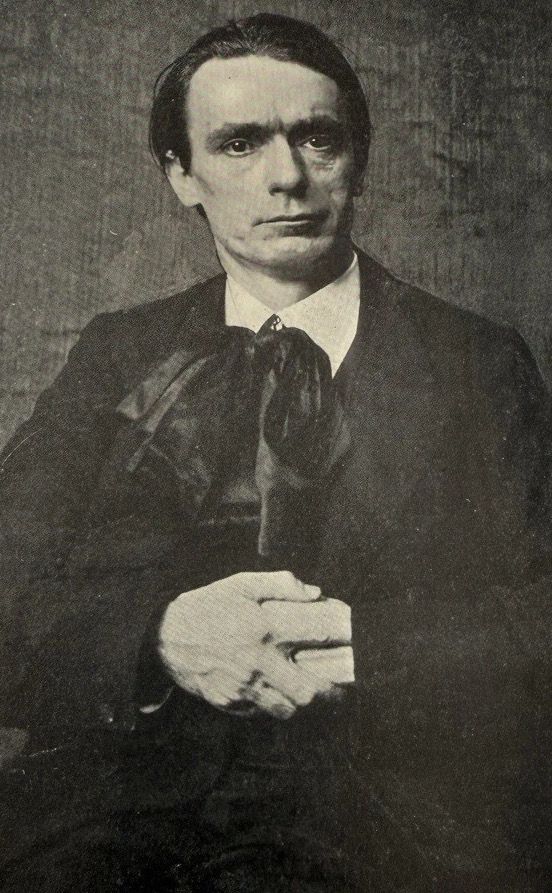
Rudolf Steiner and the Cultural Impulse of Anthroposophy
Rudolf Steiner was born in 1861, in Donji Kraljevec, in present day Croatia. He studied at the Technische Hochschule (Technical University) of Vienna. While pursuing his Doctorate of Philosophy in Vienna, he published and wrote a commentary of Johann Wolfgang von Goethe's scientific works. In 1894, he published his main work The Philosophy of Spiritual Activity. By 1886, he had articulated the basis of his anthroposophical insight and methodology in The Theory of Knowledge Implicit in Goethe's World Conception.
In 1902, after working as an editor of various cultural magazines in Berlin and as a lecturer in the Arbeiterbildungsschule ( School for the Education of Workers), Rudolf Steiner became the General Secretary of the German Section of the Theosophical Society. He developed this group together with his future wife Marie von Sivers. In 1904, two fundamental books, Theosophy, an introduction to super sensible knowledge of the world, and Knowledge of the Higher Worlds: How is it Attained? were published. An Outline of Esoteric Science, containing an overall outline of anthroposophy followed in 1909.
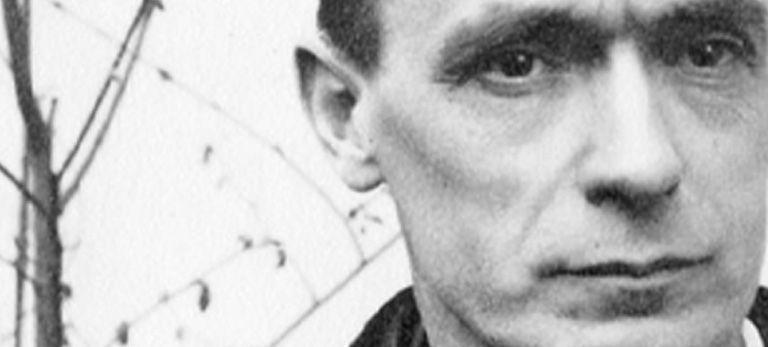
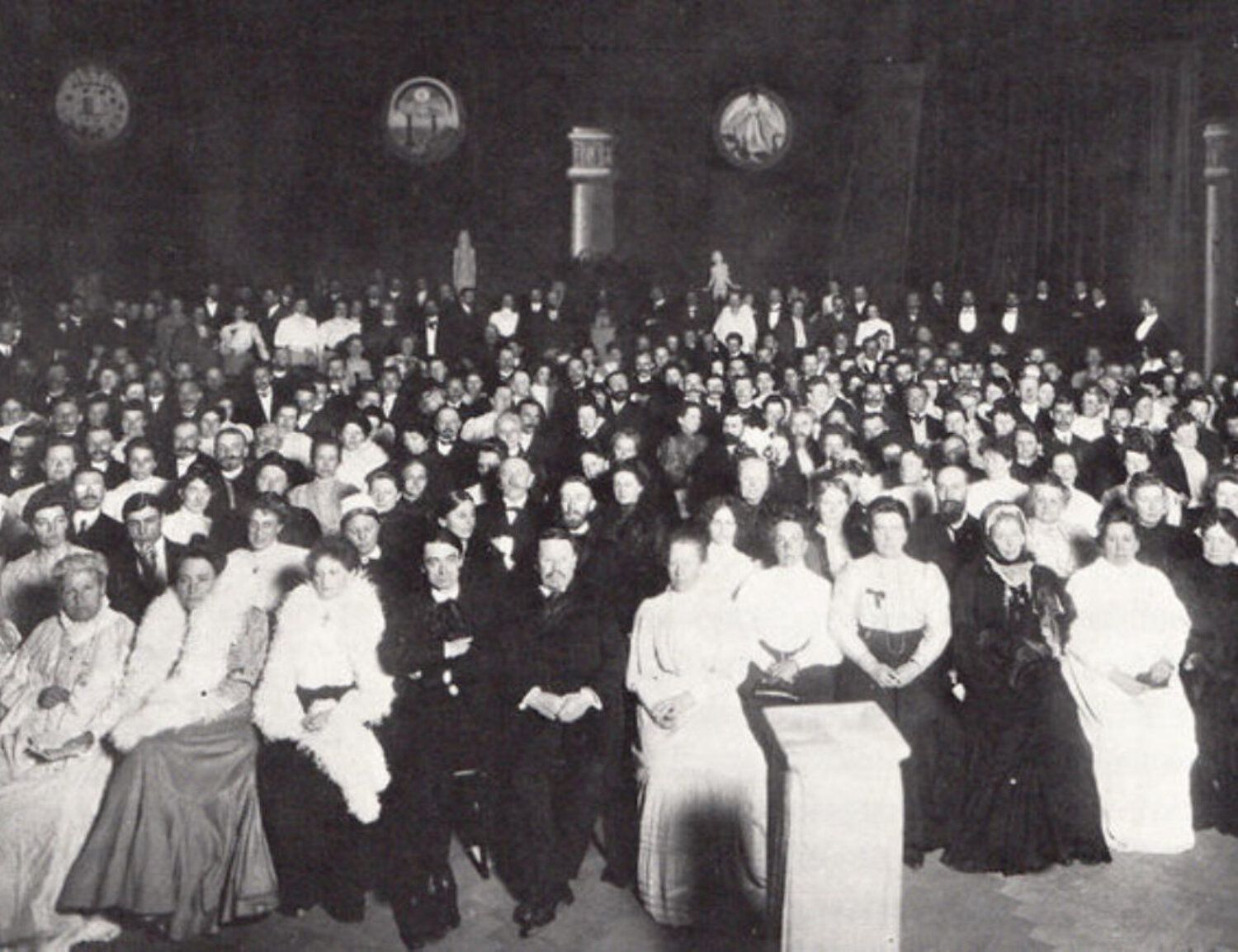
These foundational anthroposophical writings were developed within the philosophical stream of German idealism and the cultural and spiritual history of the Judea-Christian West. Together they form the methodological basis of anthroposophical spiritual science. After Rudolf Steiner separated from the Theosophical Society for philosophical reasons, The Anthroposophical Society was founded, in 1912-13. Prior to the founding, and beginning in 1910, an artistic form of expression entered the anthroposophical work with the performance of the Four Mystery Dramas written by Rudolf Steiner, along with the emergence of Eurythmy, a new art of movement. Beginning in 1911 plans were developed for the construction of a building to give anthroposophy and the related arts a suitably designed environment that could also serve as a center of research and teaching. In 1913, in a sublime ceremony with several members of the Society, Rudolf Steiner laid the foundation stone of the first Goetheanum in Dornach, Switzerland.
As part of the reform and redevelopment efforts after the First World War (1914-18), anthroposophically-inspired initiatives emerged in many areas of life. In the social and economic spheres, Rudolf Steiner presented an approach to organizing all of social life that reflected human and world realities. This approach, the 'threefold social organism', was intended to make clear that different principles apply to each of the three aspects of social life - freedom in the spiritual-cultural sphere, equity and equality in the rights-political area, and brotherhood and sisterhood in
the economic realm. Numerous student initiatives called for the reorganization of higher education, and the first Waldorf School was founded in 1919, as part of the Waldorf Astoria cigarette factory in Stuttgart, Germany. This first school was soon followed by many school initiatives. Medical courses were established. Steiner also gave a lecture course for farmers which became the foundation for the further development of biodynamic agriculture.
From 1913, with the construction of the first Goetheanum in Dornach, Switzerland, anthroposophy became increasingly visible as a cultural impulse. This emergence did not grow without criticism and opposition. One result was that an arsonist set fire to and destroyed the beautiful hand-crafted first Goetheanum in 1922/23. With the reestablishment of The General Anthroposophy Society at Christmas 1923/24, Rudolf Steiner, who until then had been active as a teacher, also took on direct leadership of The Society. After introducing the School of Spiritual Science at the Christmas Conference, he then began the First Class 50 days later. The First Class supports members of the School in broadening and deepening research in practical fields of work (pedagogy, medicine, agriculture, performance arts, mathematics/astronomy, the natural sciences).
More than a path of meditative training the First Class fosters community and nourishes the human being in all of life's pursuits. The School of Spiritual Science can be likened the 'soul' of The General Anthroposophical Society.
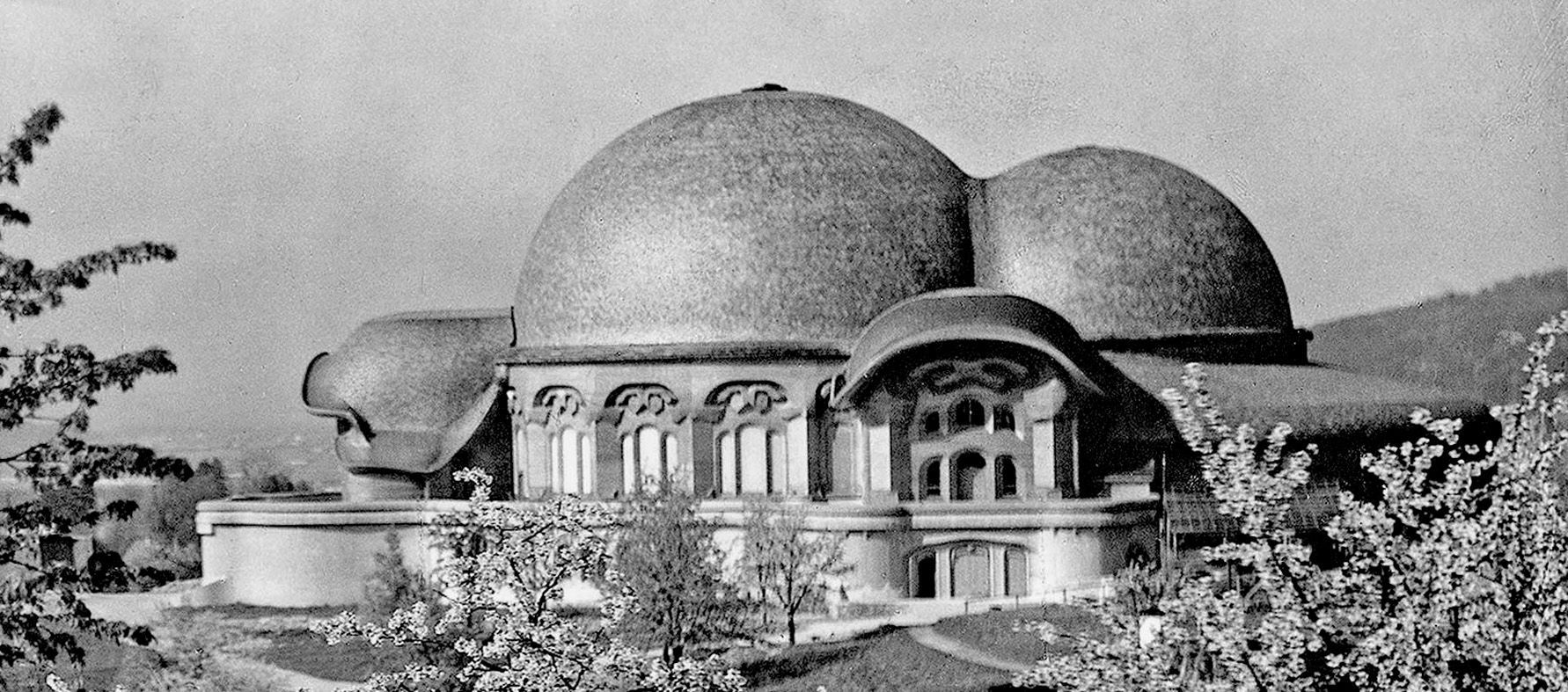
Goetheanum
Beginning in 1913, individuals came from 20 nations to create a double-domed wooden building on a hill above the village of Dornach near Basel, Switzerland. Inspired by Rudolf Steiner's revolutionary design, they worked together to realize what had become the all-embracing landmark of anthroposophy-the Goetheanum, so-named .... As this remarkable structure took shape, it became the center of an ever-expanding community of private residences and functional buildings, also designed by Rudolf Steiner. Over time this area has become a vibrant hub of anthroposophical activity, and a home for artists working out of Rudolf Steiner's indications.
On New Year's Eve 1922/23 the building was destroyed by arson. This devastating tragedy inspired an unshakeable resolve to rebuild. To this end, Rudolf Steiner executed many sketches and a model, and oversaw the planning for this re-building of the structure that now stands atop the hill in Dornach, also known as the Goetheanum. In 2028, this 'second' Goetheanum will celebrate 100 years as a thriving center of the research, arts, and culture that can be achieved when human beings strive together on the basis a true knowledge of the spiritual world.
Anthroposophy communicates knowledge that is achieved in a spiritual way. yet is does so only because daily life and the science founded on sense perception and intellectual activity lead to a boundary in the course of life, and the human being's soul existence must perish if
it could not cross over this boundary.
excerpt from leading thought #2